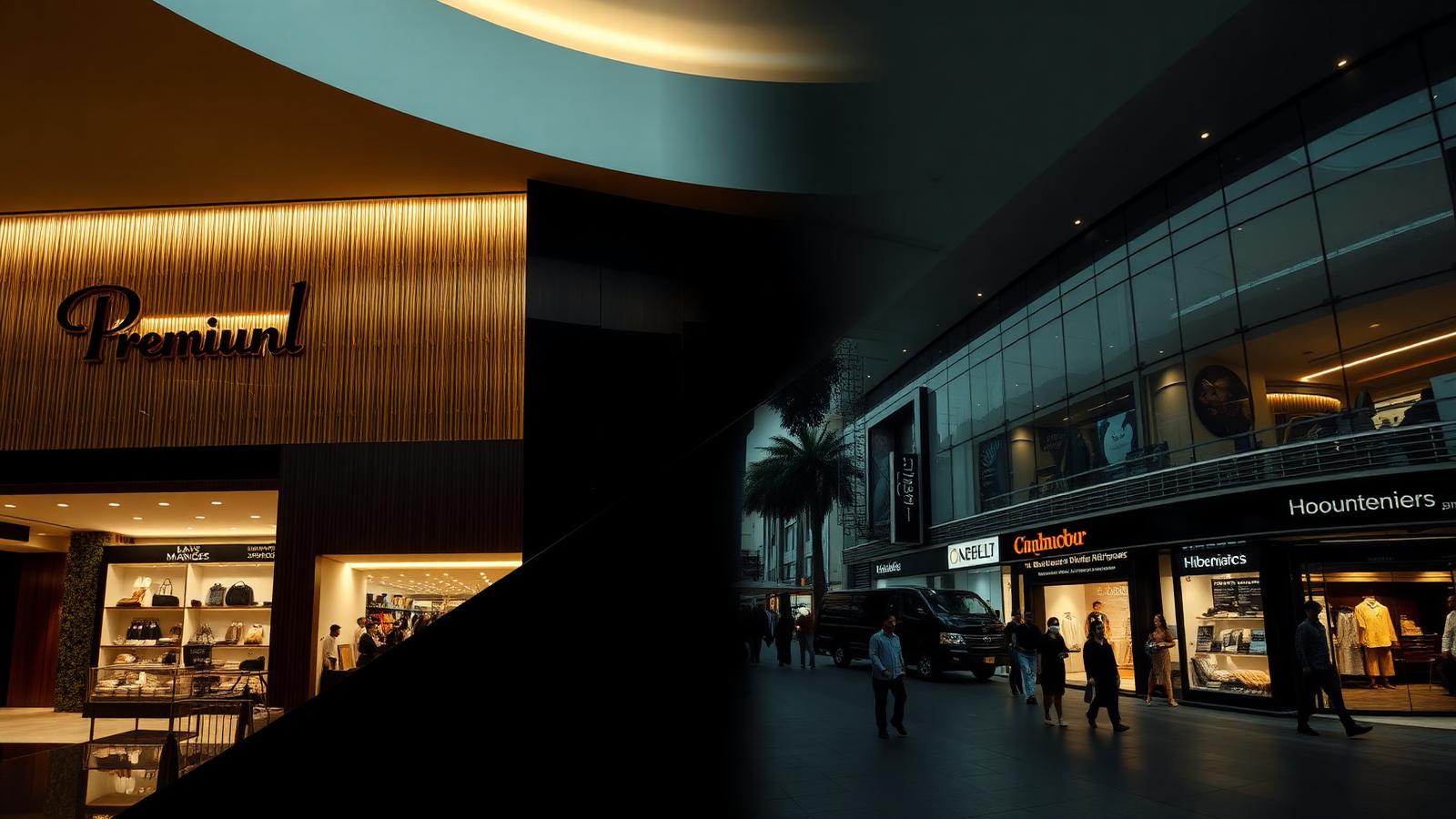
Every retail expansion review we've run in the last eighteen months has surfaced the same debate at the leadership table: high-street or mall? The honest answer is that the choice is less about format preference and more about what your brand is optimising for over the next five years — footfall reliability, brand adjacency, or unit-level economics.
What the footfall data actually says
Post-2023, footfall on premium high streets in India recovered faster than in most malls, and has stayed structurally higher on weekends. Malls, in turn, have concentrated share among the top 10–15 properties nationally. If your brand isn't guaranteed anchor placement in one of those top malls, the middle-tier mall economics are visibly under pressure — CAM inflation has outpaced footfall growth in most tier-1 markets.
A simple decision framework
- Impulse-led, small-basket categories (F&B, optical, footwear, mobile) — high street wins on visibility, walk-ins and captured ambient traffic.
- Destination shopping (electronics, home, large fashion) — top-tier malls still win because the shopper has already committed to a browsing session.
- Value retail and daily-need supermarkets — always follow catchment density, not format. Anchor high streets in residential belts routinely outperform mall equivalents on sales-per-sq-ft.
- Premium and luxury — mall placement only where brand adjacency is protected; otherwise premium high-street stretches.
The hidden cost of the wrong format
The obvious cost is rent. The less obvious — and larger — cost is the exit. A five-year mall lease with a rigid escalation and heavy CAM is materially harder to renegotiate mid-cycle than a high-street lease with a comparable landlord. Format choice is a five-year commitment, not a twelve-month one.
"You aren't choosing between a high street and a mall. You're choosing between two very different five-year cost structures, exit paths and brand narratives."
Where we come out
For most national brands expanding across Eastern and North East India today, a 70/30 high-street-led mix outperforms a mall-heavy roll-out on both time-to-open and blended unit economics. The exceptions are large-format destination categories, where a single anchor mall placement in each city still earns its keep. Everything else — start on the high street, and only add mall stores where the catchment case is unambiguous.
Questions we hear most often.
Is high-street or mall better for a national retail brand in 2026?+
For most categories in Eastern and North East India, a 70/30 high-street-led mix outperforms mall-heavy roll-outs on both time-to-open and blended unit economics. Destination categories like large-format electronics or home are the exception.
What is CAM and why does it matter so much in malls?+
CAM (Common Area Maintenance) can be 25–40% of headline rent in malls and often escalates faster than rent itself — making the mall's true five-year cost materially higher than the sticker rent suggests.
Which retail categories work best on high streets?+
Impulse-led small-basket formats — F&B, optical, footwear, mobile — win on high streets because of visibility and ambient walk-in traffic. Value retail and daily-need supermarkets should follow catchment density regardless of format.
Get a working shortlist for your own retail expansion — from KMD Realty.
Share your brief and our team responds within 48 hours with catchment reads, a shortlist and a working commercial model.
Request a site brief